


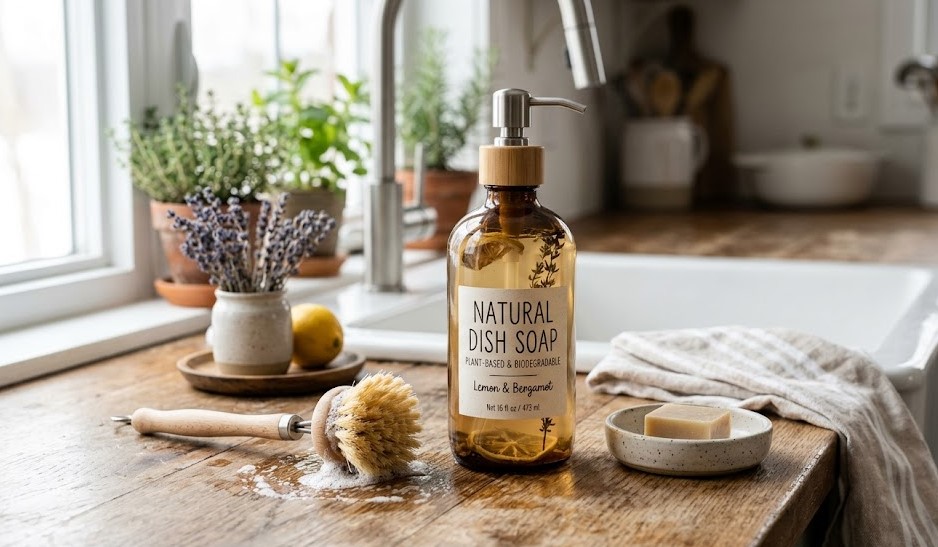
Natural dish soap is formulated using ingredients that are derived from plants and other renewable sources, making it a safer alternative to conventional chemical-based detergents. One of the most common components is plant-based surfactants, which are responsible for breaking down grease and food particles on dishes. These surfactants are usually extracted from coconut oil, corn, or sugar-based compounds, which provide effective cleaning power without harsh side effects.
In addition to surfactants, natural dish soaps often include ingredients like essential oils, aloe vera, and glycerin. Essential oils such as lemon, lavender, or tea tree are used for their natural fragrance and antibacterial properties, while aloe vera helps soothe the skin, making the soap gentle for frequent use. Glycerin is commonly added to maintain moisture and prevent hands from drying out during washing. Together, these ingredients create a balanced formula that cleans efficiently while being mild on both the skin and the environment.
Environmental Benefits of Natural Dish Soap
Natural dish soap plays an important role in reducing environmental harm caused by everyday household cleaning products. Unlike traditional dishwashing liquids that may contain phosphates, sulfates, and other synthetic chemicals, natural alternatives are designed to be biodegradable, meaning they break down more easily in water systems. This reduces the risk of long-term water pollution and helps protect aquatic life from exposure to toxic residues.
Another major environmental benefit is the lower carbon footprint associated with natural dish soap production. Since many formulations rely on plant-based ingredients, they are often sourced from renewable resources rather than petroleum-based chemicals. This shift helps reduce dependency on non-renewable fossil fuels and supports more sustainable manufacturing practices. Over time, widespread use of natural dish soaps can contribute to healthier ecosystems and cleaner waterways, making them a responsible choice for environmentally conscious households.
Health Benefits of Using Natural Dish Soap
Using natural dish soap can have a noticeable impact on personal health, especially for individuals who frequently wash dishes by hand. Traditional dishwashing liquids often contain harsh chemicals that may cause skin dryness, irritation, or allergic reactions with long-term use. In contrast, natural dish soaps are typically formulated with gentle, plant-based ingredients that are less likely to disrupt the skin’s natural moisture barrier, making them suitable for sensitive skin.
Another important health benefit is the reduction of chemical residue on kitchenware. Even after rinsing, traces of synthetic detergents can sometimes remain on plates, glasses, or utensils. Natural dish soaps aim to minimize this risk by using safer, food-friendly ingredients that rinse off more cleanly. This is particularly important for families with children, where maintaining a cleaner and safer eating environment is a top priority. Over time, switching to natural options supports a healthier home environment with fewer unnecessary chemical exposures.
Natural Dish Soap vs Conventional Dish Soap
When comparing natural dish soap with conventional dishwashing liquids, the most noticeable difference lies in their ingredients and overall impact on health and the environment. Conventional dish soaps are often formulated with synthetic chemicals such as sulfates, phosphates, and artificial fragrances. These ingredients are highly effective at cutting grease quickly, but they can sometimes be harsh on the skin and may contribute to environmental pollution when washed down the drain.
On the other hand, natural dish soaps rely on plant-based cleansing agents that are gentler yet still effective for everyday cleaning. While they may produce less foam compared to chemical-based products, foam does not determine cleaning strength. Many users find that natural alternatives clean dishes just as well when used properly, especially for regular household grease and food residue. The key difference is that natural options prioritize safety and sustainability, while conventional products often focus on strong industrial cleaning performance.
How to Choose the Best Natural Dish Soap
Choosing the right natural dish soap requires careful attention to ingredients, certifications, and personal needs. One of the most important factors is checking the ingredient list. A high-quality natural dish soap should contain plant-based surfactants such as coconut-derived cleansers and avoid harsh chemicals like sulfates, parabens, and synthetic fragrances. The simpler and more recognizable the ingredient list, the more likely it is to be gentle and environmentally friendly.
Another key factor is looking for trusted certifications and user-friendly performance. Labels such as EPA Safer Choice or EWG Verified can help identify products that meet strict safety and environmental standards. It is also important to consider how the soap feels during use—some natural soaps may be thicker or produce less foam, but they should still effectively remove grease without requiring excessive amounts. Additionally, scent preference, skin sensitivity, and packaging sustainability (such as recyclable bottles) all play a role in selecting the best option for your kitchen needs.
DIY Natural Dish Soap at Home
Making natural dish soap at home is a practical and cost-effective way to ensure full control over the ingredients you use in your kitchen. Many homemade recipes rely on simple, readily available items such as liquid castile soap, baking soda, vinegar, and essential oils. These ingredients work together to create a cleaning solution that is gentle on the skin while still being effective at breaking down grease and food residue on dishes.
One of the biggest advantages of DIY natural dish soap is customization. You can adjust the fragrance by adding essential oils like lemon for freshness or tea tree for its natural antibacterial properties. Some people also prefer thicker or thinner consistencies depending on their washing style. While homemade versions may not produce as much foam as commercial soaps, they are often just as effective for everyday dishwashing when used correctly. This approach also reduces plastic waste and supports a more sustainable household routine.
Common Myths About Natural Dish Soap
One common myth about natural dish soap is that it does not clean as effectively as conventional dishwashing liquids. Many people assume that because it produces less foam, it must be weaker. However, foam is not an indicator of cleaning power. Natural dish soaps use plant-based surfactants that are specifically designed to break down grease and food particles efficiently, even if they create less visible suds.
Another misconception is that natural dish soaps are always expensive and inaccessible. While some premium brands can be costly, there are also many affordable options available, and DIY versions can reduce costs even further. Additionally, some believe natural products have a short shelf life or limited effectiveness, but most well-formulated natural dish soaps are stable, long-lasting, and suitable for daily household use. These myths often come from outdated perceptions rather than actual performance comparisons.
Practical Tips for Using Natural Dish Soap Effectively
Using natural dish soap effectively often comes down to technique rather than quantity. Since these soaps are formulated with milder, plant-based ingredients, it is important to use the right amount and apply it properly to get the best cleaning results. A small amount applied to a sponge or directly into warm water is usually enough to remove grease and food residue from most everyday dishes. Warm water also helps activate the natural surfactants, improving overall cleaning performance.
Another useful tip is to allow dishes with heavy grease or dried food particles to soak for a few minutes before washing. This reduces scrubbing effort and helps the soap work more efficiently. Pairing natural dish soap with the right cleaning tools, such as microfiber sponges or soft scrub brushes, can further improve results without damaging cookware. Over time, these simple habits make natural dish soap just as effective as conventional options while maintaining its eco-friendly and skin-safe benefits.
Conclusion
Natural dish soap is a practical and sustainable alternative to conventional dishwashing liquids, offering a balanced combination of effective cleaning and environmental responsibility. Throughout this article, we explored how plant-based ingredients, biodegradable formulas, and gentle cleansing agents make it a safer option for both household use and the planet. It not only helps reduce exposure to harsh chemicals but also supports healthier skin and cleaner kitchenware.
As more people shift toward eco-conscious living, natural dish soap stands out as a simple yet impactful change in daily routines. Whether purchased from certified brands or made at home, it provides reliable cleaning power without compromising health or environmental safety. Choosing natural dish soap is ultimately a step toward a cleaner kitchen and a more sustainable lifestyle.
FAQs
1. What is natural dish soap made of?
It is usually made from plant-based surfactants, essential oils, and biodegradable cleaning agents.
2. Is natural dish soap effective against grease?
Yes, it effectively removes grease when used with warm water and proper cleaning techniques.
3. Is natural dish soap safe for sensitive skin?
Most natural dish soaps are gentle and suitable for sensitive skin due to the absence of harsh chemicals.
4. Can I make natural dish soap at home?
Yes, simple ingredients like castile soap, baking soda, and essential oils can be used to make it at home.
Visit to Washington Times for more info
