


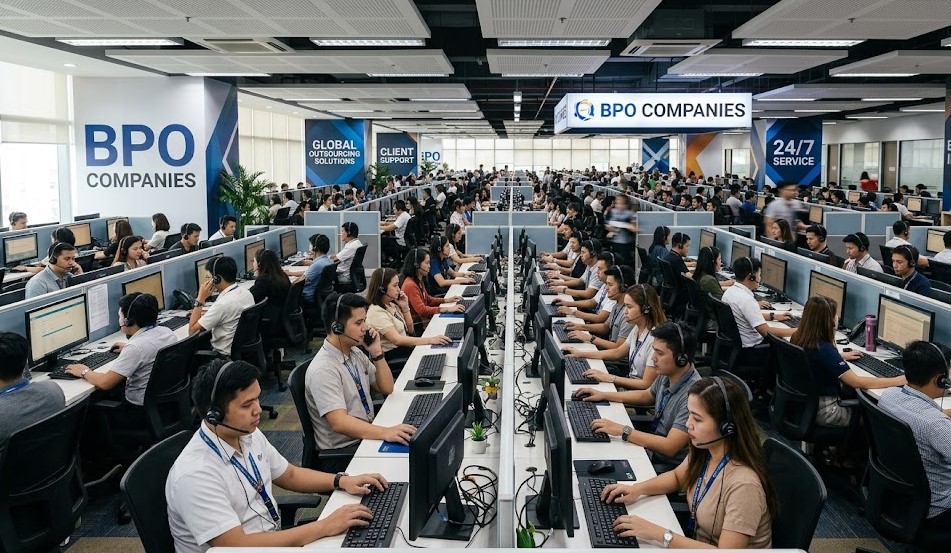
BPO companies (Business Process Outsourcing companies) are organizations that handle specific business tasks for other companies, allowing them to focus on their core operations like product development, marketing, and strategy. Instead of managing everything in-house, businesses outsource functions such as customer support, payroll, human resources, data entry, and technical assistance to specialized service providers. This model helps companies save time, reduce costs, and improve overall efficiency while maintaining professional service quality.
In simple terms, BPO companies act as external partners that take over repetitive or time-consuming business processes. These companies are equipped with trained staff, advanced communication tools, and standardized workflows to ensure smooth operations. Over time, BPO services have evolved beyond traditional call centers and now include digital services like analytics, IT support, and AI-powered customer interaction systems. This evolution shows how important BPO companies have become in the global business ecosystem, especially for organizations aiming to scale quickly without increasing internal workload.
Types of BPO Services
BPO companies offer a wide range of services that are generally divided into two main categories: back-office services and front-office services. Back-office services include internal business operations that are not directly customer-facing, such as data entry, payroll processing, accounting, human resources management, and compliance handling. These tasks are essential for smooth business functioning but are often time-consuming, which is why many organizations prefer outsourcing them to specialized providers.
Front-office services, on the other hand, involve direct interaction with customers and play a key role in shaping customer experience. These services include customer support, technical helpdesks, telemarketing, sales assistance, and complaint handling. In modern bpo companies, these services are often powered by advanced technologies like AI chatbots, CRM systems, and cloud-based communication platforms. This combination of human expertise and digital tools helps businesses deliver faster responses, improve customer satisfaction, and maintain consistent service quality across global markets.
Top Global BPO Companies
The global bpo companies market is dominated by a few large organizations that provide end-to-end outsourcing solutions to multinational clients. These companies have built strong reputations by delivering high-quality services across customer support, IT services, finance, and business operations. Some of the most recognized names include Accenture, Teleperformance, Concentrix, Genpact, Cognizant, Infosys BPM, Wipro, and TCS. Each of these firms operates on a massive global scale, serving industries such as banking, healthcare, retail, and technology.
These top BPO providers are known not only for their size but also for their innovation and adaptability. For example, Teleperformance is widely recognized for customer experience services in multiple languages, while Genpact focuses heavily on digital transformation and data-driven business processes. Similarly, companies like Concentrix and Accenture invest heavily in AI, automation, and analytics to improve efficiency and reduce operational costs for their clients. According to industry research, these companies collectively employ hundreds of thousands of professionals worldwide, making them key players in the global outsourcing ecosystem.
How BPO Companies Work
BPO companies operate by taking over specific business processes from client organizations through formal outsourcing agreements. The process usually begins when a company identifies tasks that are time-consuming, repetitive, or require specialized expertise. These tasks are then assigned to a BPO provider, which sets up a dedicated team, workflow system, and technology infrastructure to handle the operations efficiently. Communication between the client and the BPO provider is maintained through service level agreements (SLAs), which define performance standards, response times, and quality expectations.
Once the partnership is established, the BPO company integrates its systems with the client’s processes to ensure smooth coordination. Employees within the BPO firm are trained specifically for the client’s requirements, ensuring consistency and accuracy in service delivery. Many modern bpo companies also use advanced tools such as customer relationship management (CRM) software, automation platforms, and AI-powered analytics to monitor performance and improve productivity. This structured approach allows businesses to scale operations quickly without investing heavily in infrastructure or hiring large in-house teams.
Benefits of BPO Companies
One of the biggest advantages of working with bpo companies is cost reduction. Businesses can significantly lower operational expenses by outsourcing tasks such as customer support, payroll, and data management instead of maintaining large in-house departments. This is especially beneficial for startups and small businesses that need professional services but have limited budgets. By outsourcing, companies also avoid costs related to hiring, training, infrastructure, and technology upgrades, which can be very expensive in the long run.
Another major benefit is improved efficiency and focus on core business activities. When routine or repetitive tasks are handled by external experts, internal teams can concentrate on strategic goals like innovation, marketing, and business expansion. Additionally, many bpo companies operate 24/7, providing round-the-clock customer support across different time zones, which improves customer satisfaction and global reach. With access to skilled professionals and advanced tools, businesses also experience higher accuracy, faster turnaround times, and better service quality, making outsourcing a powerful growth strategy in today’s competitive market.
Challenges in the BPO Industry
Despite the many advantages, bpo companies also face several challenges that can impact service quality and business relationships. One of the most common issues is communication barriers, especially when outsourcing is done across different countries with different languages, cultures, and time zones. These differences can sometimes lead to misunderstandings, delayed responses, or inconsistent service delivery if not managed properly. Ensuring smooth communication between clients and outsourcing teams remains a critical challenge in the industry.
Another major challenge is data security and privacy concerns. Since bpo companies handle sensitive business information such as customer data, financial records, and internal operations, they must maintain strict security protocols. Any breach or misuse of data can seriously damage a company’s reputation and lead to legal consequences. In addition, high employee turnover rates in some BPO sectors can affect service consistency and training costs. To overcome these challenges, companies must invest in better training programs, secure technology systems, and strong compliance frameworks to ensure reliability and trust.
Latest Industry Trends in BPO
The bpo companies industry is rapidly evolving due to advancements in technology and changing business needs. One of the most significant trends is the integration of artificial intelligence (AI) and automation into everyday operations. Many BPO providers now use AI-powered chatbots, robotic process automation (RPA), and machine learning tools to handle repetitive tasks faster and more accurately. This shift not only reduces costs but also improves response times and overall service quality.
Another major trend is the rise of remote and hybrid work models within bpo companies. After the global shift toward remote working, many outsourcing firms have adopted flexible work environments, allowing employees to operate from different locations while maintaining productivity through cloud-based systems. Additionally, there is a growing focus on customer experience (CX), where companies prioritize personalized, fast, and seamless interactions. Sustainability and ethical outsourcing practices are also gaining attention, as businesses now prefer partners who follow responsible labor and environmental standards.
Conclusion & FAQs
In conclusion, bpo companies have become an essential part of the modern global business ecosystem. They help organizations reduce operational costs, improve efficiency, and access specialized skills without building large in-house teams. From customer support and finance to IT services and data management, outsourcing has evolved into a strategic solution that supports business growth and scalability. As technology continues to advance, BPO services are becoming even more intelligent, automated, and customer-focused, making them a key driver of digital transformation across industries.
At the same time, businesses must carefully choose the right outsourcing partner to ensure data security, service quality, and long-term reliability. While challenges such as communication barriers and workforce management exist, the benefits of outsourcing still outweigh the limitations when handled properly. Overall, bpo companies will continue to play a major role in shaping how global businesses operate in the future.
FAQs
1. What do BPO companies do?
BPO companies handle outsourced business tasks like customer support, payroll, data entry, HR services, and technical assistance for other organizations.
2. Why do companies use BPO services?
Companies use BPO services to reduce costs, improve efficiency, access skilled professionals, and focus more on core business activities.
3. Are BPO companies only call centers?
No, modern BPO companies offer much more than call centers, including IT services, analytics, finance operations, and automation-based solutions.
4. Which industries use BPO companies the most?
Industries like banking, healthcare, retail, telecommunications, and technology heavily rely on BPO companies for daily operations.
Visit to Washington Times for more info
